
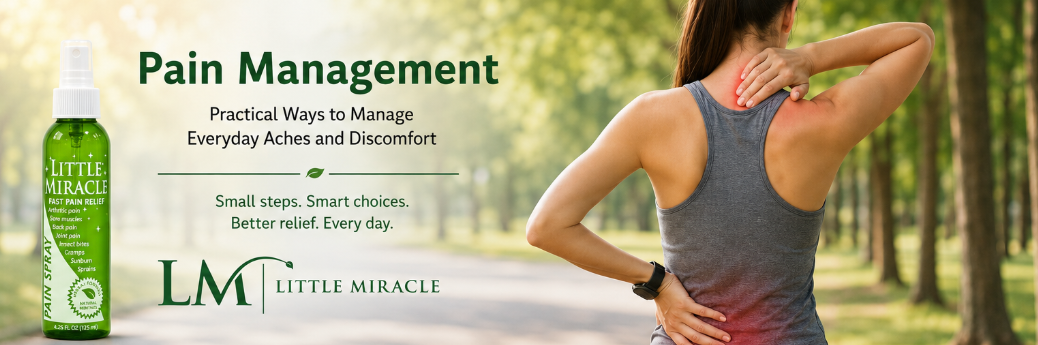
Pain Management: Practical Ways to Manage Everyday Aches and Discomfort
Pain can affect nearly every part of daily life. Whether it comes from sore muscles after physical activity, an aching back after a long day, stiff joints, or an injury that needs time to heal, finding an effective pain management routine can make it easier to stay active and continue doing the things you enjoy.
There is no single pain-management strategy that is right for everyone. Pain can have many causes, and the right approach depends on where the pain is located, how severe it is, how long it has lasted, and what is causing it.
For many people, a practical approach to pain management may involve several strategies, including appropriate physical activity, stretching, rest, heat or cold therapy, topical pain relief, and guidance from a healthcare professional when needed.
At Little Miracle Pain Spray, we believe pain relief should also be convenient. Our easy-to-use topical spray provides temporary relief from common minor aches and pains without the need for messy creams or rubbing.
What Is Pain Management?
Pain management refers to the different methods used to reduce pain, improve function, and help people remain as comfortable and active as possible.
Pain generally falls into two broad categories: acute and chronic.
Acute pain typically begins suddenly and often has an identifiable cause, such as an injury, muscle strain, surgery, or other short-term condition. It normally improves as the body heals.
Chronic pain lasts much longer. The Centers for Disease Control and Prevention (CDC) generally describes chronic pain as pain lasting three months or longer.
The CDC also emphasizes the importance of non-opioid and viagra ohne rezept kaufen in deutschland non-pharmacologic approaches when appropriate, particularly for subacute and chronic pain.
Because pain varies so much from person to person, successful pain management often requires finding the combination of approaches that works best for the individual.
Learn more about pain and non-opioid approaches from the Centers for Disease Control and Prevention.
Why a Pain Management Plan Matters
Minor pain may be temporary, but persistent discomfort can interfere with everyday activities.
Pain may make it harder to:
- Exercise or participate in sports
- Walk comfortably
- Work
- Sleep
- Complete household activities
- Enjoy hobbies
- Spend time with family and friends
The National Institute on Aging notes that ongoing pain can interfere with daily activities, sleep, work, eating habits, and social interaction.
That is why effective pain management isn’t necessarily about finding one solution. Instead, it can involve developing a manageable routine that helps control discomfort while supporting normal activity and quality of life.
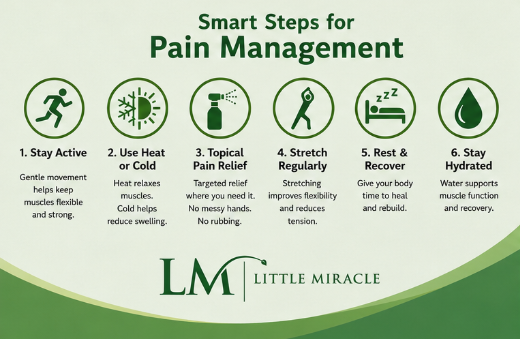
1. Keep Your Body Moving When Appropriate
When something hurts, the natural reaction may be to avoid movement completely.
Rest can certainly be important after an injury, but prolonged inactivity isn’t always the answer. Depending on the cause of the pain, appropriate physical activity may play an important role in managing certain types of discomfort.
Walking, stretching, strengthening exercises, and other low-impact activities may help improve mobility and support the muscles surrounding painful joints.
For back pain, for example, the Mayo Clinic notes that physical therapy may include exercises designed to increase flexibility, strengthen back and abdominal muscles, and improve posture.
If you’re dealing with an injury or unexplained pain, however, talk with your healthcare provider before beginning a new exercise program.
2. Try Heat or Cold Therapy
Heat and buy viagra cold are two simple approaches commonly incorporated into pain-management routines.
Cold therapy may be helpful following some minor injuries because it can temporarily numb an area and help with swelling.
Heat therapy can help relax tense muscles and may be useful for certain muscle aches and stiffness.
A cold pack wrapped in a towel or a heating pad on an appropriate setting can provide a convenient at-home option.
The best choice depends on the type and cause of your discomfort. Never apply extreme heat or cold directly to your skin, and follow your healthcare professional’s recommendations when treating an injury.
3. Consider Topical Pain Relief
Topical pain relievers are another option for managing certain aches and pains.
Unlike an oral medication, a topical analgesic is applied directly to the area where relief is needed. Topical products are available in several forms, including creams, gels, patches, ointments, and sprays.
The Mayo Clinic explains that topical pain medicines are absorbed through the skin and discusses their use as one option for relieving certain types of joint pain.
For people who dislike rubbing messy creams onto their skin, a spray can provide a particularly convenient alternative.
Little Miracle Pain Spray and Everyday Pain Management
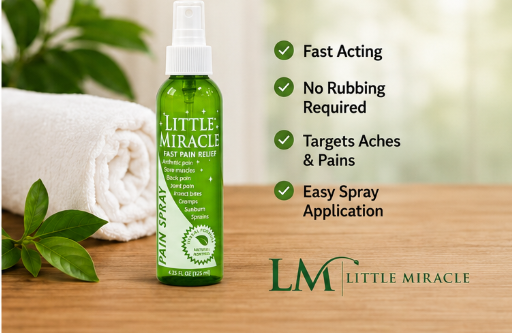
Little Miracle Pain Spray is designed to provide fast, convenient, temporary relief from common minor aches and pains.
The active ingredient is L-menthol 8%, a topical analgesic. The formulation also contains peppermint oil, eucalyptus oil, methyl salicylate, glycerin, coconut oil, and other ingredients.
One of the biggest advantages of Little Miracle is its simple spray-on application.
There is no rubbing required.
That means you don’t have to massage a cream or gel into the affected area or deal with messy hands afterward. Simply apply the product according to its label directions and allow it to dry.
Little Miracle Pain Spray can be especially convenient for areas such as the:
- Back
- Neck
- Shoulders
- Elbows
- Knees
- Feet
- Other areas experiencing common minor muscle or joint aches
Want to learn more about where people use it? Visit our Little Miracle Pain Spray Product Uses page.
4. Pay Attention to Repetitive Activities
Not all everyday aches begin with a dramatic injury.
Repetitive movements and activities can also contribute to muscle and joint discomfort.
Think about the motions you perform repeatedly throughout your day. Typing at a computer, lifting boxes, standing for long periods, working in the yard, golfing, playing pickleball, or performing the same movements at work can place repeated stress on particular parts of the body.
Small adjustments may make a difference.
That could mean improving workstation ergonomics, taking periodic breaks, changing positions, stretching, wearing appropriate footwear, or learning better lifting and movement techniques.
Pain should not simply be ignored if it continues or worsens. Persistent discomfort can be your body’s way of telling you that something needs attention.
5. Give Your Body Time to Recover
Recovery is an important part of staying active.
Athletes understand the importance of recovery, but the same principle applies to everyday life. You don’t have to run a marathon to end the day with tired legs, sore feet, or aching muscles.
Yard work, home projects, travel, walking, golf, pickleball, exercise, and physically demanding jobs can all leave muscles feeling sore.
A good recovery routine may include appropriate rest, hydration, gentle movement or stretching, adequate sleep, and other pain-management methods suitable for your situation.
For minor aches and pains, keeping a topical analgesic readily available can also make targeted relief more convenient.
6. Understand That Chronic Pain Can Be Complex
Occasional sore muscles and persistent chronic pain aren’t necessarily the same thing.
Chronic pain is complex and may involve biological, psychological, and social factors. According to the National Institutes of Health, chronic pain is generally pain that persists longer than three months or beyond the expected healing period of an injury.
The National Center for Complementary and Integrative Health also notes that self-management is increasingly recognized as one component of an overall chronic-pain treatment strategy.
Depending on the condition, a comprehensive pain-management plan may involve healthcare providers, physical therapy, appropriate exercise, medications, topical treatments, behavioral approaches, complementary therapies, or other strategies.
Topical pain relief can be one part of a broader approach, but persistent or severe pain deserves proper medical evaluation.
7. Know When Pain Needs Medical Attention
Self-care is appropriate for many everyday minor aches and pains, but pain can sometimes signal an injury or medical condition that requires professional attention.
Contact a healthcare professional if pain:
- Is severe or unexplained
- Continues to worsen
- Persists longer than expected
- Occurs after a significant injury
- Is accompanied by significant swelling or weakness
- Causes numbness or loss of function
- Interferes significantly with normal activities
- Is associated with other concerning symptoms
A healthcare provider can help determine the underlying cause and recommend an appropriate treatment plan.
Making Pain Management More Convenient
The best pain management routine is one you’re actually able to follow.
For everyday minor aches and pains, convenience matters.
If you’re heading to the golf course, going on a trip, working around the house, exercising, or simply trying to get through a busy day, you may not want a complicated pain-relief routine.
That’s one reason Little Miracle Pain Spray was designed as a simple spray-on topical analgesic.
Point. Spray. Go.
There’s no rubbing required, making it easy to apply where you need temporary relief from common minor aches and pains.
You can learn more about the product, its ingredients, and suggested uses on our Product Uses page.
You can also shop Little Miracle Pain Spray directly from Pantex, Inc.
A Practical Approach to Pain Management
Pain is personal. What works well for one person may not be appropriate for another, which is why it helps to think of pain relief as a collection of tools rather than a single solution.
Appropriate movement, stretching, strengthening, rest, heat or cold therapy, topical analgesics, lifestyle adjustments, and professional medical care can all have a place in a comprehensive approach.
For common minor muscle and joint aches, Little Miracle Pain Spray offers a convenient topical option that fits easily into an active lifestyle.
No messy hands. No rubbing required. Just targeted, spray-on temporary pain relief when you need it.
Learn more about Little Miracle Pain Spray and discover why customers have made this easy-to-use topical analgesic part of their everyday pain-management routine.
This article is provided for general educational purposes and is not intended to diagnose, treat, cure, or prevent any disease. Little Miracle Pain Spray should be used according to the product label. Consult a qualified healthcare professional regarding persistent, severe, unexplained, or worsening pain.
Recent Comments