

Muscle Strains in Back: Causes, Symptoms, Treatment, and Relief Options
Back pain is one of the most common physical complaints among adults, and one of the leading causes is muscle strains in back. Whether caused by lifting heavy objects, poor posture, sports injuries, or sudden movements, strained back muscles can interfere with daily life, work, and mobility.
Understanding what causes muscle strains, how to recognize the symptoms, and what treatment options are available can help you recover faster and muscle strains in back, including natural pain relief solutions like Little Miracle Pain Spray by Pantex.
What Are Muscle Strains in Back?
A muscle strain occurs when muscle fibers or tendons are overstretched or torn. In the back, strains often affect the lower back muscles because they support much of the body’s weight and movement.
Muscle strains in back can range from mild discomfort to severe pain that limits movement. According to the Cleveland Clinic, back strains are among the most common causes of lower back pain and can happen to anyone regardless of age or fitness level.
- Common Areas Affected
- Lower back (lumbar region)
- Mid-back (thoracic region)
- Upper back and neck muscles
The lower back is especially vulnerable because it handles bending, twisting, lifting, and standing movements throughout the day.
Common Causes of Muscle Strains in Back
There are several reasons why people experience muscle strains in back. Some happen suddenly, while others develop gradually over time.
1. Heavy Lifting
Improper lifting technique is one of the leading causes of back strains. Lifting with the back instead of the legs can overstress muscles and ligaments.
2. Poor Posture
Slouching while sitting or standing places extra stress on spinal muscles. Over time, poor posture can weaken muscles and increase strain risk.
3. Sports and Exercise Injuries
Athletes and active individuals may strain their back muscles during:
- Weightlifting
- Running
- Golf
- Tennis
- Football
- Gym workouts
4. Sudden Movements
Twisting too quickly or making awkward movements can overstretch back muscles unexpectedly.
5. Repetitive Motions
Jobs or activities involving repetitive bending, lifting, or twisting may gradually lead to muscle strains in back.
6. Weak Core Muscles
Weak abdominal and back muscles reduce spinal support, increasing the chance of injury.

Symptoms of Muscle Strains in Back
Symptoms vary depending on the severity of the strain. Mild strains may only cause soreness, while more serious injuries can significantly affect mobility.
Common Symptoms Include:
- Muscle stiffness
- Localized back pain
- Muscle spasms
- Swelling or inflammation
- Pain when bending or twisting
- Tenderness to touch
- Reduced range of motion
The Mayo Clinic explains that strained muscles often feel worse with movement and may improve with rest.
How Are Muscle Strains in Back Diagnosed?
Most back strains are diagnosed through a physical examination and symptom review. A healthcare provider may ask:
- When the pain started
- What activities triggered it
- Whether pain radiates to other areas
- If numbness or weakness is present
In severe or persistent cases, imaging tests like X-rays or MRIs may be ordered to rule out spinal issues or disc injuries.
Treatment Options for Muscle Strains in Back
Fortunately, most muscle strains in back improve with conservative care and proper recovery techniques.
Rest and Activity Modification
Short-term rest may help, but prolonged inactivity can sometimes worsen stiffness. Gentle movement is usually encouraged after the initial injury phase.
Ice and Heat Therapy
- Ice helps reduce inflammation during the first 24–48 hours.
- Heat may improve circulation and relax tight muscles later in recovery.
Stretching and Physical Therapy
Gentle stretches and strengthening exercises can restore flexibility and prevent recurring injuries.
Over-the-Counter Pain Relief
Many people use topical creams, sprays, or oral medications for temporary relief.
Why Topical Pain Relief Is Popular for Back Strains
Topical pain relievers have become increasingly popular because they provide localized support directly where discomfort occurs.
Unlike oral medications, topical solutions are applied directly to the skin over the affected muscles.
Benefits of Topical Pain Relief
- Convenient application
- Fast-acting sensation
- Targeted support
- Less systemic exposure compared to oral medications
The National Institutes of Health notes that topical analgesics may help manage muscle and joint discomfort in certain individuals.
Little Miracle Pain Spray for Muscle Strains in Back
One option many people explore is Little Miracle Pain Spray, a topical spray designed to support temporary relief for sore muscles and discomfort.
Why People Choose Little Miracle Pain Spray
- Easy spray application
- Fast-drying formula
- Convenient for active lifestyles
- Designed for targeted use
People dealing with muscle strains in back often prefer sprays because they can be applied quickly without needing to rub creams deeply into sensitive muscles.
You can also learn more about their product lineup on the Pantex product page.
How to Prevent Muscle Strains in Back
Preventing future injuries is just as important as treating current pain.
Improve Lifting Technique
Always:
- Bend your knees
- Keep objects close to your body
- Avoid twisting while lifting
Strengthen Core Muscles
Exercises that strengthen the abdomen and lower back improve spinal stability.
Stretch Regularly
Flexibility reduces tension and lowers injury risk.
Maintain Good Posture
Whether sitting at a desk or standing, posture matters.
Stay Active
Regular movement helps maintain healthy muscles and joints.
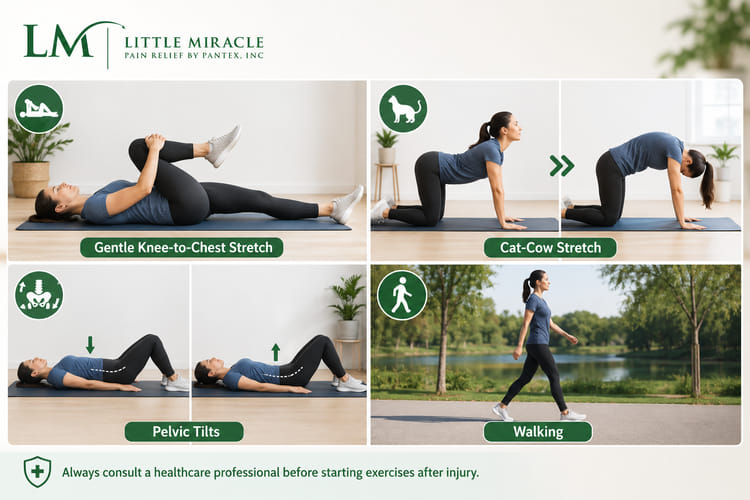
Exercises That May Help Support Recovery
Always consult a healthcare professional before starting exercises after injury.
Gentle Knee-to-Chest Stretch
This stretch may help loosen tight lower back muscles.
Cat-Cow Stretch
A yoga-inspired movement that promotes spinal mobility.
Pelvic Tilts
Helpful for improving core engagement and lower back support.
Walking
Low-impact walking encourages circulation and gentle movement.
When to See a Doctor
While many muscle strains in back improve within days or weeks, medical attention may be necessary if you experience:
- Severe pain
- Numbness or tingling
- Weakness in legs
- Loss of bladder or bowel control
- Pain lasting more than several weeks
- Fever or unexplained weight loss
These symptoms may indicate a more serious condition beyond a simple muscle strain.
The Role of Recovery and Lifestyle
Recovery isn’t only about treating pain — it’s also about supporting overall muscle health.
Healthy Habits That Support Recovery
- Proper hydration
- Balanced nutrition
- Adequate sleep
- Stress management
- Consistent movement
Chronic stress can also contribute to muscle tension, especially in the upper and lower back.
Can Muscle Strains in Back Become Chronic?
Yes, recurring or untreated strains can sometimes lead to ongoing discomfort. Repeated injury may cause:
- Muscle imbalance
- Chronic inflammation
- Reduced flexibility
- Increased susceptibility to future strains
That’s why addressing the root cause is essential.
Final Thoughts on Muscle Strains in Back
Muscle strains in back are extremely common, but with proper care, most people recover successfully. Understanding the causes, symptoms, and treatment options can help you manage discomfort and reduce the risk of future injury.
Whether your strain comes from sports, work, exercise, or daily activities, combining smart recovery strategies with targeted support may help you stay active and comfortable.
Many individuals turn to topical solutions like Little Miracle Pain Spray as part of their routine for temporary muscle relief and convenience.
To explore additional products and information, visit:
For additional medical information about back strains and muscle injuries, consult trusted sources such as:
By staying proactive and caring for your back muscles properly, you can reduce downtime and continue doing the activities you enjoy most.
Recent Comments